PROCEDURE OVERVIEW · NORTH ALABAMA
Body Contouring in Decatur, Alabama
Compare options for localized fat, loose skin, and changes in breast shape—and understand the scars, recovery, and planning each involves.
Body contouring is a group of procedures, not one operation. Depending on your concern, it may involve removing fat, reducing excess skin, or reshaping breasts and other areas. After major weight loss, surgery can address skin that no longer fits the underlying body contour. [1]
This guide covers liposuction, mini and full tummy tucks, breast lift and reduction, arm lift, and thigh lift. Use it to prepare for a consultation in Decatur, Huntsville, or Athens, then explore the individual procedure guides for more detail.
About this website: We are an independent information resource, not a medical practice, and are not affiliated with the former practice at this domain. We currently do not book appointments or have participating clinicians. This guide provides general education; your clinician determines what is appropriate for you.
ON THIS PAGE
Match the procedure to the concern
Start by describing what bothers you, rather than choosing an operation by name. Fat beneath the skin, loose skin, and changes in breast position call for different assessments. A smaller incision is useful only if the procedure can address the actual problem.
- Localized fat with good skin elasticity: liposuction may be an option. It does not remove hanging skin. [2]
- Excess skin after weight changes: a tummy tuck, arm lift, or thigh lift may be considered, depending on the area. Skin removal leaves scars. [1][13]
- Breast position or weight: a lift reshapes and raises the breasts; a reduction also removes breast tissue to reduce size and weight. [5][6]
Pregnancy-related changes may involve several areas, but there is no standard package everyone needs. People of different genders may seek contouring after weight changes. An examination should establish which concerns surgery can address and which are likely to remain.
About the illustrations: the five original drawings below are paired with the same procedures as on the historical page. They are educational illustrations, not patient before-and-after photographs or a personalized surgical plan. Select a drawing to open the original.
Liposuction: reducing localized fat
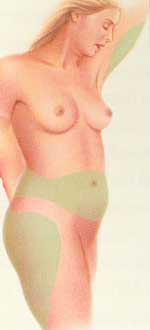
Liposuction removes selected deposits of fat through small incisions. Common treatment areas include the abdomen, flanks, hips, thighs, and upper arms. Skin elasticity matters: removing fat does not by itself remove excess skin or reliably correct cellulite. [2]
It is intended for contour changes, not treatment of obesity or a substitute for weight management. If the area has both fat and loose skin, ask whether liposuction alone would leave the concern unresolved and how it compares with skin-removal surgery. [2]
Explore the liposuction guide for treatment areas, historical photos, recovery, and consultation questions.
Mini tummy tuck: the lower abdomen
A mini-abdominoplasty addresses a limited amount of loose skin and fat below the belly button. It usually uses a lower abdominal incision and generally does not reposition the belly button. Muscle tightening may be included in selected cases. [3]
It has a narrower scope than a full tummy tuck. If looseness extends above the navel, a mini procedure may not meet your goals. Ask the surgeon to explain the area that would change, the scar location, and what would remain untreated. [3]
Related guide: mini-abdominoplasty.
Full tummy tuck: more extensive abdominal changes
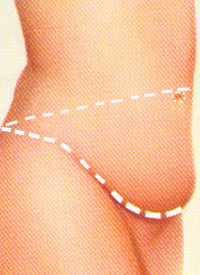
A full abdominoplasty removes excess abdominal skin and fat and may repair separated or weakened abdominal muscles. It usually involves a lower abdominal incision; an incision around the navel may also be needed to address skin above it. The amount of excess skin influences the incision pattern. [4]
Discuss the upper and lower abdomen, waist, and any concern about the pubic area separately. Liposuction or another technique may be proposed as part of the plan, but those steps are not automatically included. Ask to see the expected extent of the scars before agreeing to surgery.
Related guide: full abdominoplasty.
Breast lift: changing position and shape
A breast lift, or mastopexy, removes excess skin and reshapes the breast. It may suit someone whose main concern is sagging rather than breast size. A lift alone does not substantially increase breast volume or upper-breast fullness. [5]
Implants are not automatically necessary. If you want more fullness as well as a lift, discuss augmentation separately, including its additional risks and future care. If your breasts feel too heavy, reduction may be a more relevant discussion. [5][6]
Related guides: breast lift and breast augmentation.
Breast reduction: reducing size and weight
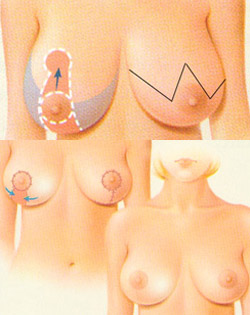
Breast reduction removes breast tissue, fat, and skin. It can address concerns such as heavy breasts, neck or back discomfort, shoulder-strap grooves, and limits on physical activity. The aim includes reshaping the breasts as well as reducing their size. [6]
Discuss the balance between symptom relief, desired size, and scars. Important considerations include possible changes in nipple sensation, asymmetry, and effects on breastfeeding. The appropriate approach depends on your anatomy, goals, and health. [6]
Read the breast reduction guide for more on candidacy, recovery, and insurance questions.
Arm lift: removing loose upper-arm skin
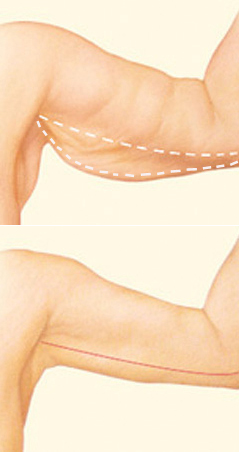
An arm lift, or brachioplasty, removes excess upper-arm skin. Fat may also be removed directly or with liposuction. The incision can run along the inside or back of the arm; its length depends on how much skin must be addressed. [7]
The trade-off is a lasting scar in exchange for less loose skin. Ask which scar pattern fits your situation and where it would be visible with your arms raised or at your sides. If substantial fat is also present, discuss whether treatment should be combined or separated into stages.
Related guide: arm lift and thigh lift.
Thigh lift: addressing loose inner-thigh skin
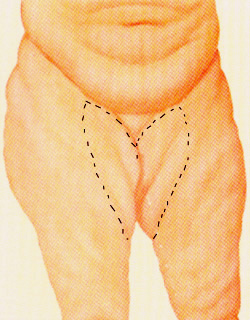
A thigh lift removes excess skin to reshape the thigh. For some patterns of upper inner-thigh looseness, an incision may be placed near the groin. More extensive laxity may require a longer incision down the inner thigh. [8]
The location of the loose skin matters as much as its amount. Liposuction removes fat but does not replace the skin-removal part of a lift. Ask how the proposed incision addresses your concern, where the scar will sit, and what movement restrictions to expect. [2][8]
Related guide: arm lift and thigh lift.
Candidacy and timing
ASPS describes typical body-contouring candidates as adults whose weight has stabilized, who do not smoke, and whose health supports healing. Realistic expectations, nutrition, and sustainable habits also matter. An individual assessment is more useful than assuming that one weight or age cutoff applies to everyone. [9]
Discuss any planned pregnancy or further weight loss before choosing the timing of surgery. Bring information about previous operations, weight changes, medications, and medical conditions. Ask whether anything needs attention first and how future changes could affect the result.
If several areas concern you, ask for a prioritized plan. Discuss the benefits and burdens of separate operations compared with a combined procedure, including anesthesia time, wound care, mobility, and available help at home. A treatment name or package should not determine the plan.
How nonsurgical body contouring differs
Devices that cool, heat, or otherwise treat localized tissue have different purposes and limitations from skin-removal surgery. The FDA notes that noninvasive body contouring does not treat obesity or provide weight loss. Results may be temporary, and more than one treatment may be needed. [10]
These treatments do not remove hanging skin in the way an operation does. Before considering one, ask for the exact device, its authorized treatment area, likely benefit, risks, and total course of treatment. “Nonsurgical” does not mean risk-free. [10]
Preparation, recovery, and risks
Preparation may include medical testing, a review of prescriptions and supplements, and a plan to stop smoking. Any medication changes should be coordinated with the surgical team and the clinician who prescribed them. For outpatient surgery, arrange a responsible adult to drive you home and help during early recovery. [11]
- Plan around the actual operation: the care required after liposuction can differ from that after several skin-removal procedures. Get written instructions for dressings, any drains, garments, and follow-up. [12]
- Arrange practical help: describe your work duties, childcare, stairs, driving, and lifting needs. Ask when each activity is safe, rather than relying on one universal return-to-work date.
- Keep recovery moving safely: follow the team’s instructions about walking and avoiding strain on incisions. Ask what symptoms require a prompt call and who will assess you outside office hours. [12]
Risks include bleeding, infection, fluid collections, poor wound healing, altered sensation, contour irregularities, and unfavorable scars. Blood clots and anesthesia complications can also occur. The type and extent of surgery and your health affect the discussion of individual risk. [13]
Get a procedure-specific recovery and emergency plan before surgery. Clarify where follow-up will happen, how complications are managed, and whether additional care could create extra costs. Early appearance is not the final result; ask when the surgeon expects to assess healing and contour.
Costs and insurance
There is no single price for body contouring because the term covers different operations and combinations. Request an itemized estimate for the surgeon, anesthesia, facility, testing, garments, and other expected expenses. Ask what follow-up and any revision policy include. [14]
Cosmetic body contouring is generally self-funded. Do not assume that symptoms, prior weight loss, or a particular insurance company automatically establish coverage. Ask your insurer and surgeon whether your proposed procedure meets your plan’s requirements, what documentation is needed, and which charges remain your responsibility. [14][16]
An important distinction is panniculectomy, which removes an overhanging apron of abdominal skin and fat. Unlike a tummy tuck, it does not tighten abdominal muscles. Insurance may cover panniculectomy in some circumstances; confirm the exact planned operation and coverage before scheduling. [15][16]
If you are considering breast reduction for physical symptoms, ask about the separate coverage review for that procedure. Obtain a written explanation of any approved medical portion and any elective additions; coverage for one part does not establish coverage for the whole plan.
Choosing a surgeon in Decatur, Huntsville, or Athens
Verify the surgeon’s credentials and experience with the exact operation you are considering. For physicians, check the Alabama medical board’s licensee search for license information and available public actions. A specialty listed there is not independent verification of board certification. [17]
If a surgeon claims certification in plastic surgery, check the American Board of Plastic Surgery directly. Ask where surgery takes place and who provides anesthesia. ASPS requires its members to use accredited, state-licensed, or Medicare-certified surgical facilities. [18][19]
Compare the full care plan as well as the price. If you travel to Huntsville or Athens, account for follow-up visits and the location of urgent assessment. This website does not verify or endorse individual local surgeons.
Sources and further reading
Medical information and linked resources checked September 21, 2026. This guide updates the supplied historical article and retains its five original illustrations. It has not been reviewed by a clinician on behalf of this website.
- American Society of Plastic Surgeons. Body contouring overview.
- American Society of Plastic Surgeons. Liposuction overview.
- American Society of Plastic Surgeons. There’s more than one type of tummy tuck.
- American Society of Plastic Surgeons. Tummy tuck procedure steps.
- American Society of Plastic Surgeons. Breast lift overview.
- Mayo Clinic. Breast reduction surgery.
- American Society of Plastic Surgeons. Arm lift procedure steps.
- American Society of Plastic Surgeons. Thigh lift procedure steps.
- American Society of Plastic Surgeons. Body contouring candidates.
- U.S. Food and Drug Administration. Non-invasive body contouring technologies.
- American Society of Plastic Surgeons. Preparing for body contouring.
- American Society of Plastic Surgeons. Body contouring recovery.
- American Society of Plastic Surgeons. Body contouring risks and safety.
- American Society of Plastic Surgeons. Body contouring cost.
- American Society of Plastic Surgeons. Panniculectomy overview.
- American Society of Plastic Surgeons. Panniculectomy cost and insurance.
- Alabama Board of Medical Examiners and Medical Licensure Commission. Licensee search.
- American Board of Plastic Surgery. Verify certification.
- American Society of Plastic Surgeons. ASPS member qualifications.