BREAST PROCEDURES · NORTH ALABAMA
Breast Augmentation in Decatur, Alabama
Compare implant options, understand recovery and long-term care, and prepare for a consultation. An independent guide for readers in Decatur, Huntsville, and Athens.
Breast augmentation increases breast volume using implants or, in selected cases, transferred body fat. People may consider it for naturally smaller breasts, differences in size, or volume changes after pregnancy or weight loss. Choosing surgery also means considering scars, recovery, and ongoing care. [1]
If you are researching breast augmentation in Decatur, AL, a useful consultation should connect your goals with a specific plan: what can change, which implant or alternative may fit your anatomy, and what future monitoring and costs to expect.
About this website: We are an independent information resource, not a medical practice, and are not affiliated with the former practice at this domain. We currently do not book appointments or have participating surgeons. This guide is general education; your clinician determines what is appropriate for you.
ON THIS PAGE
What can breast augmentation change?
Augmentation can add fullness and projection and improve some differences between the breasts. It cannot guarantee perfect symmetry or a particular bra cup size. The original practice’s emphasis on matching the result to the person’s proportions remains a useful starting point for discussing expectations. [1]
Implants alone do not adequately correct substantial breast drooping. A breast lift may be appropriate, either with augmentation or separately. If your goal is to reduce breast size and weight, breast reduction addresses a different concern. [1]
Who may be a candidate?
ASPS describes potential candidates as physically healthy people whose breasts have fully developed, who have realistic expectations, and who are not currently pregnant or breastfeeding. Your reasons for considering surgery should be your own. [2]
Discuss previous breast procedures, changes in breast health, medications, nicotine use, and future pregnancy plans. Explain what bothers you in your own words; you do not need to arrive knowing which implant size or technique to choose.
Implant choices and sizing
Saline and silicone gel
Both types have a silicone outer shell. Saline implants contain sterile saltwater; silicone implants contain silicone gel. FDA-approved saline implants are indicated for cosmetic breast augmentation in women aged 18 and older, and silicone gel implants in women aged 22 and older. Approval indications for reconstruction differ. [3]
Ask the surgeon to compare the feel, visibility, possible rippling, and follow-up needs of each option for your tissue coverage. A saline rupture usually causes a noticeable loss of implant volume; silicone rupture can be silent and may require imaging to detect. [10]
Smooth versus textured surfaces
Surface texture is a separate choice from the implant’s filling. The FDA reports a higher risk of breast implant-associated anaplastic large cell lymphoma, or BIA-ALCL, with textured implants than with smooth implants. The older page’s preference for textured saline implants should be understood as historical practice, not a current recommendation. [4]
Before deciding, ask for the exact manufacturer, model, surface, and patient information booklet. Review the device’s boxed warning and patient decision checklist with the surgeon, and keep your implant device card after surgery. [12]
Choosing a size that fits your goals
Implant volume is measured in cubic centimeters, or cc. A volume number alone does not predict a cup size or reproduce someone else’s photograph. Ask how your existing breast tissue, chest dimensions, skin, implant shape, and intended placement affect the proposed result. Bring examples to explain your preferences rather than treating an image as a guaranteed outcome.
Incisions and implant placement
Common incision locations include the fold under the breast, the edge of the areola, or the armpit. The choice depends on anatomy, the implant, and the operative plan. Incisions leave scars, even when they are positioned to be less noticeable. [5]
The implant is placed in a surgically created pocket either behind the breast tissue and above the pectoral muscle, or beneath the muscle. Ask what the recommended position means for tissue coverage, appearance, movement, and recovery. A placement that suits one person may not suit another. [5]
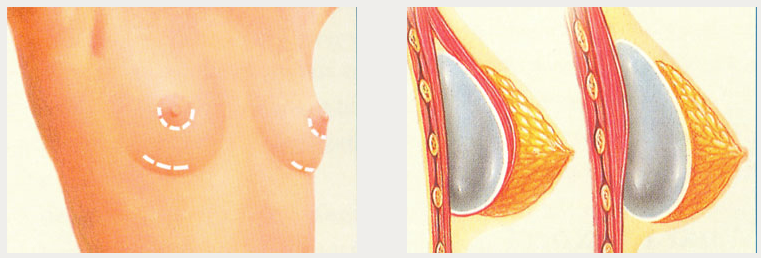
Breast augmentation may use general anesthesia or intravenous sedation. After the implant is positioned, the incisions are closed and dressings applied. Confirm the planned anesthesia, surgical facility, and discharge arrangements with your team. [5]
The former page described one surgeon’s hospital, operative time, drains, and tape routine. Those details are not universal. Your current surgeon should explain whether drains or a support garment are planned and provide instructions for your operation.
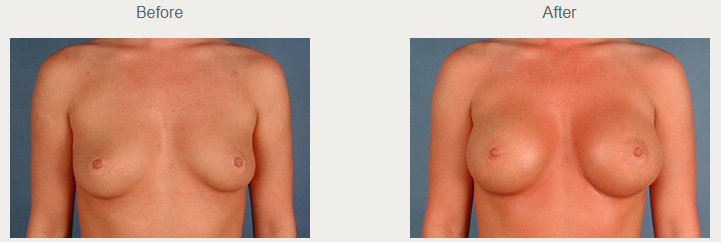
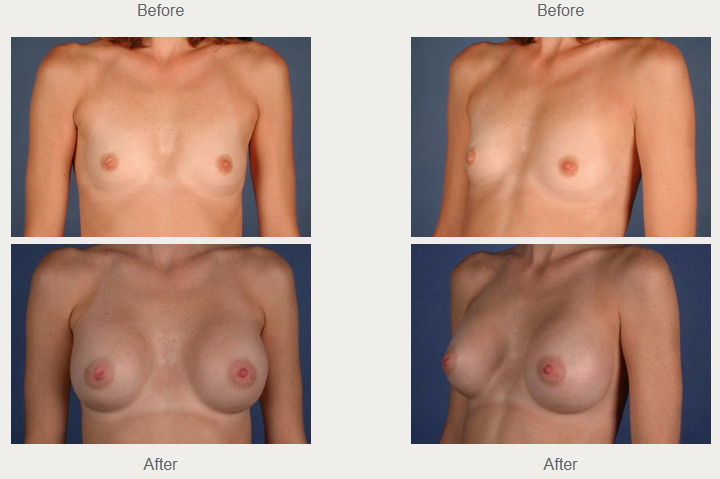
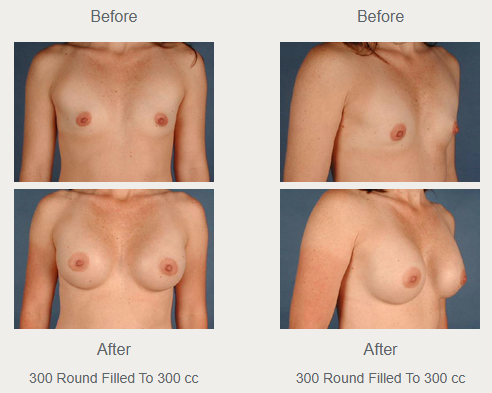
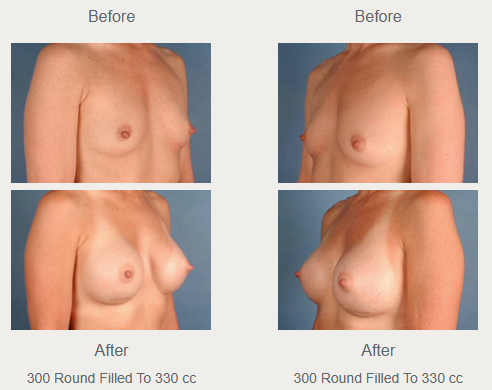
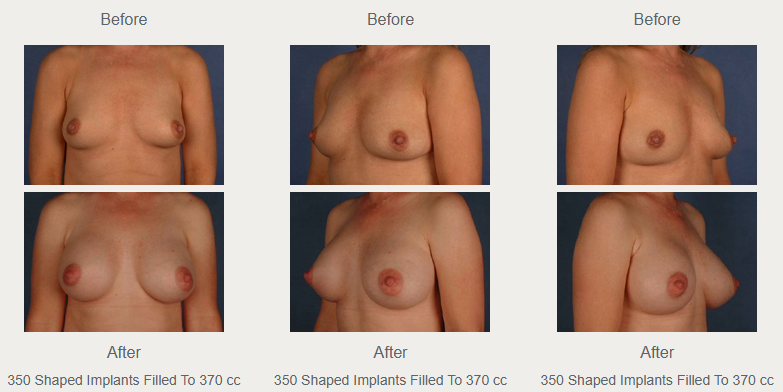
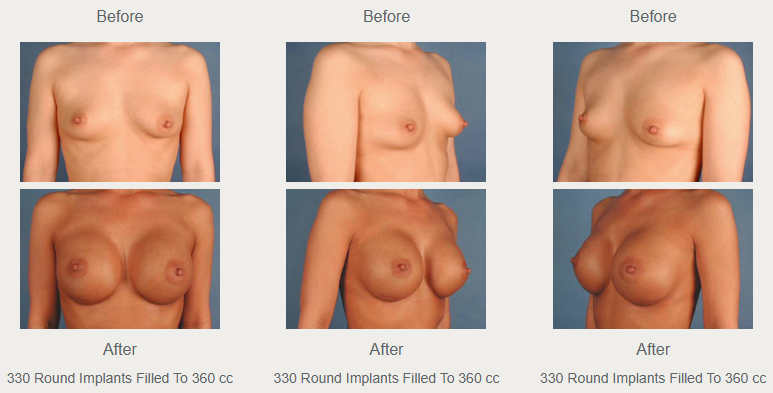
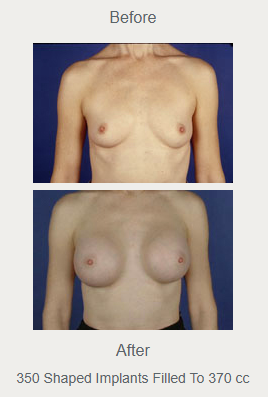
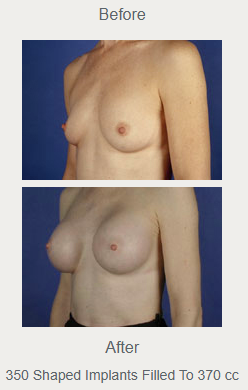
Breast augmentation before and after photos
These photographs come from the historical material supplied for this website. The original page states that its after photographs were taken at approximately 12 months. That timing is the original page’s description, not an independent verification of each image. These are not results from a current participating practice.
Original labels and photos are preserved. The cc values describe the historical examples and are not implant-size recommendations. Lighting, posture, existing tissue, and other factors can affect comparisons. Individual results vary; click or tap a photo to view the original image.
How much does breast augmentation cost in Decatur?
A consultation is needed for a local estimate. As a national reference, ASPS lists an average breast augmentation with implants cost of $4,875, checked September 21, 2026. This is only part of the total expense; anesthesia, operating-room charges, and other costs are additional. It is not a complete Decatur price quote. [6]
Ask for a written breakdown covering the surgeon, implants, anesthesia, facility, tests, garments, prescriptions, and follow-up. Confirm what happens financially if you need an unexpected visit or revision. Budget separately for time off work, help at home, and future implant care.
Most insurance plans do not cover cosmetic augmentation, related complications, or cosmetic revision. Reconstructive or developmental indications require a separate coverage discussion and do not automatically establish eligibility. Ask your insurer about the proposed procedure and any relevant exclusions before scheduling. [6]
Preparing for surgery
Preparation may include medical testing, a review of medicines and supplements, and a plan to stop smoking. Some medicines affect bleeding or anesthesia. Ask your surgeon and prescribing clinician to coordinate any changes; do not stop a prescription on your own. [7]
For outpatient surgery, arrange a responsible adult to drive you home and stay with you at least the first night. ASPS recommends an accredited surgical center or a hospital for breast augmentation. [7]
Give the team a realistic picture of your responsibilities: carrying children, lifting at work, driving, cooking, and exercise. Ask which tasks need help, how long to arrange that help, and who can answer questions after hours.
Recovery and time away from work
Early recovery commonly involves chest tightness, soreness, swelling, and dressings or a support garment. ASPS notes that the more acute pain often eases over the first several days, while soreness and swelling can last for weeks. Follow your surgeon’s instructions for medications, wound care, and garment use. [8]
- First several days: plan for rest, help at home, and the early follow-up your surgeon schedules.
- Returning to work: the NHS suggests allowing roughly one to two weeks off, but physical work may require longer or modified duties. [9]
- Lifting and exercise: the NHS advises avoiding heavy lifting and strenuous exercise for at least a month. Your own surgeon should decide when specific activities are appropriate. [9]
- Settling of the result: appearance and feel may continue changing over the following months as healing progresses. [9]
Ask separately about driving, reaching overhead, lifting a child, and returning to upper-body exercise. A general timeline cannot account for the details of your operation or your job. Follow the team’s instructions for showering, tape, drains if used, and bra selection. [8]
Risks and implant safety
Possible complications include bleeding, infection, changes in nipple or breast sensation, persistent pain, scarring, implant movement, visible rippling, rupture, and further surgery. Capsular contracture occurs when the scar capsule around an implant tightens; it can cause firmness, distortion, or pain. [10][11]
BIA-ALCL and other reported cancers
BIA-ALCL is a cancer of the immune system that usually develops in fluid or scar tissue around an implant. Its risk is low but serious, and it is more strongly associated with textured implants. Persistent swelling, a new lump, or pain around an implant—sometimes years after surgery—needs medical assessment. [4]
The FDA has also received reports of squamous cell carcinoma and other lymphomas in the capsule around implants. These are distinct from BIA-ALCL. Ask the surgeon to discuss current safety information for the specific implant being considered. [10]
Symptoms called breast implant illness
Some people with implants report fatigue, joint or muscle pain, and problems with concentration, often described as breast implant illness or BII. The FDA states that the causes and relationship to implants remain unclear, and there is no specific diagnostic test. Some patients report improvement after removal, but removal does not guarantee that symptoms will resolve. Discuss symptoms with a clinician so other possible causes can also be assessed. [15]
Long-term care, imaging, and mammograms
Breast implants are not lifetime devices. Their lifespan varies, and future operations may be needed for a complication or a change in preferences. There is no single replacement date that applies to everyone. Keep your implant information and arrange ongoing follow-up. [12]
Screening for silicone implant rupture
For silicone gel implants, the FDA-recommended schedule summarized by ASPS is an ultrasound or MRI beginning five to six years after placement, then every two to three years. Symptoms or a suspected problem can require assessment sooner; the routine schedule is not a reason to delay evaluation. [11]
Breast cancer screening continues
After cosmetic augmentation, continue the breast cancer screening recommended for your age and risk. Tell the mammography facility about your implants when booking. Additional views may be needed to show breast tissue more clearly. Imaging to check an implant for rupture serves a different purpose from screening for breast cancer. [13]
Coordinate the timing of screening after surgery with your surgeon and breast-imaging team. A new lump or other breast change should be assessed rather than waiting for the next routine appointment. [12]
Planning care in Decatur, Huntsville, or Athens
Compare the whole care plan when considering offices across North Alabama. Find out where the consultation, operation, and follow-up visits occur, and who will evaluate a problem if the operating surgeon is unavailable. Ask whether urgent visits require travel to a different location.
Verify plastic surgery board certification with the American Board of Plastic Surgery. The Alabama medical board’s licensee search provides license status and available public disciplinary actions. The state database’s specialty listing is not independently verified board certification. [16][17]
For an office outside Decatur, include the travel needed for early checks and unexpected visits in your planning. Ask for written after-hours contact instructions and a copy of the follow-up schedule before you commit to a date.
Common questions
Can I breastfeed after breast augmentation?
Many people can produce milk after breast surgery, but a full supply is not guaranteed. The CDC notes that surgery can affect nerves and ducts, and that incision location and implant placement can matter. Discuss future breastfeeding before surgery; after delivery, lactation support and monitoring the baby’s weight may be helpful. [14]
Can fat transfer be used instead of an implant?
Fat transfer is another approach to breast augmentation for selected patients. It uses fat taken from another part of the body. Ask what change it could achieve for you and how its limitations, risks, and possible need for further treatment compare with implants. [1]
Do implants need replacing every 10 years?
There is no universal 10-year replacement rule. Some implants need attention earlier, while others remain in place longer. Regular follow-up, symptoms, imaging findings, and your preferences guide the discussion. [12]
What if I already have textured implants?
The FDA does not recommend routine removal solely because of BIA-ALCL concerns in people without symptoms. Review your device records and personal situation with your surgeon. New swelling, a lump, or persistent pain warrants assessment. [4]
Can pregnancy change the result?
Yes. Pregnancy, weight changes, and aging can change the appearance of augmented breasts. Discuss your plans when considering the timing of surgery and expectations for how the result may change. [11]
Sources and further reading
Medical information and linked resources checked September 21, 2026. This article updates historical site material using the sources below. It has not been reviewed by a clinician on behalf of this website.
- American Society of Plastic Surgeons. Breast augmentation overview.
- American Society of Plastic Surgeons. Breast augmentation candidates.
- U.S. Food and Drug Administration. Types of breast implants.
- U.S. Food and Drug Administration. Questions and answers about BIA-ALCL.
- American Society of Plastic Surgeons. Breast augmentation procedure steps.
- American Society of Plastic Surgeons. Breast augmentation cost.
- American Society of Plastic Surgeons. Breast augmentation preparation.
- American Society of Plastic Surgeons. Breast augmentation recovery.
- NHS. Breast enlargement.
- U.S. Food and Drug Administration. Risks and complications of breast implants.
- American Society of Plastic Surgeons. Breast augmentation risks and safety.
- U.S. Food and Drug Administration. What to know about breast implants.
- American Cancer Society. Mammograms with breast implants.
- Centers for Disease Control and Prevention. Breast surgery and breastfeeding.
- U.S. Food and Drug Administration. Medical device reports for systemic symptoms in women with breast implants.
- American Board of Plastic Surgery. Verify certification.
- Alabama Board of Medical Examiners and Medical Licensure Commission. Licensee search.