BODY CONTOURING · NORTH ALABAMA
Liposuction in Decatur, Alabama
Explore what liposuction can change, what it costs, and how to plan for recovery. An independent guide for readers in Decatur, Huntsville, and Athens.
Some areas of fullness remain even when your weight is steady and you exercise regularly. Liposuction removes localized fat to reshape those areas. Common treatment sites include the abdomen, waist, hips, thighs, upper arms, and beneath the chin. [1]
If you are researching liposuction in Decatur, AL, start by identifying what you want to change: a pocket of fat, loose skin, or both. That distinction helps you ask better questions and compare recommendations from plastic surgeons across North Alabama.
About this website: We are an independent information resource, not a medical practice, and are not affiliated with the former practice at this domain. We currently do not book appointments or have participating surgeons. This guide is general education; your clinician determines what is appropriate for you.
ON THIS PAGE
What can liposuction change?
Liposuction is a contouring procedure, not a treatment for obesity or a substitute for weight management. Its purpose is to improve proportions by reducing selected fat deposits. It does not reliably correct cellulite, remove stretch marks, or eliminate hanging skin. Skin elasticity influences how smoothly the skin settles over the treated area. [1]
At a consultation, describe your concern in practical terms: a waistline that feels out of proportion, persistent fullness at the hips, or an area that affects how clothing fits. Ask the surgeon to explain which part of the concern comes from fat and which part comes from skin or underlying anatomy.
Who may be a candidate?
Potential candidates are generally healthy adults with realistic expectations and skin that retains good elasticity. The American Society of Plastic Surgeons also emphasizes avoiding smoking and vaping. A photograph or a clothing size alone cannot establish whether surgery is appropriate. [2]
Bring a full medical and surgical history, including medications, supplements, allergies, and nicotine use. Heart or lung conditions, diabetes, and other health issues may affect the assessment and surgical plan. [3]
If you are planning substantial weight loss or a future pregnancy, discuss timing before committing to surgery. A stable weight helps make the likely contour change easier to assess, and later weight changes can alter the result. [4]
Liposuction, a tummy tuck, or a nonsurgical treatment?
Liposuction targets fat
Liposuction removes fat through small incisions. It does not include the abdominal skin removal or muscle repair that may be part of a tummy tuck. These operations address different concerns and may sometimes be combined. [1][5]
A tummy tuck addresses excess abdominal skin
A tummy tuck, or abdominoplasty, removes excess skin and fat and commonly repairs weakened or separated abdominal muscles. If loose skin is your main concern after pregnancy or weight changes, ask whether an abdominal skin-removal procedure would better match your goal. Our full abdominoplasty and mini abdominoplasty guides explore these options. [5]
Nonsurgical body contouring uses a different approach
Treatments such as fat freezing act through the skin rather than suctioning fat through an incision. They may reduce a small bulge, but results can be limited or temporary, and they have their own risks. The FDA emphasizes that noninvasive body contouring does not produce weight loss or the health benefits of weight loss. Ask about the specific device, expected change, number of sessions, and possible complications. [6]
How liposuction is performed
The surgeon makes small incisions and introduces a narrow tube called a cannula to loosen and suction out fat. A fluid solution is commonly placed in the treatment area beforehand. The anesthesia plan may involve local anesthesia, sedation, or general anesthesia, depending on the technique, extent of treatment, and your needs. [3][7]
You may hear several technique names:
- Tumescent liposuction: uses an injected solution containing local anesthetic and medication that helps limit bleeding before fat removal. [3]
- Power-assisted liposuction: uses a cannula that moves mechanically to help release fat. [7]
- Ultrasound-assisted liposuction, including VASER: uses ultrasound energy as part of the fat-removal process. [7]
- Laser-assisted liposuction: uses laser energy to help break down fat before removal. [7]
A technique name is a starting point for questions. Ask why the surgeon recommends it for your anatomy, what benefit they expect, and what additional risks or costs it introduces. Also ask where the incisions will be and what scars you should expect.
Procedure length and the need for an overnight stay vary with the treatment area, extent of surgery, and health assessment. There is no single one-hour operation or same-day discharge promise that applies to everyone. [3]
Liposuction before and after photos
The two hip comparisons below come from the historical material supplied for this website. They are not examples from a current participating practice. The original material does not document the timing of the photographs, technique, or complete treatment details.
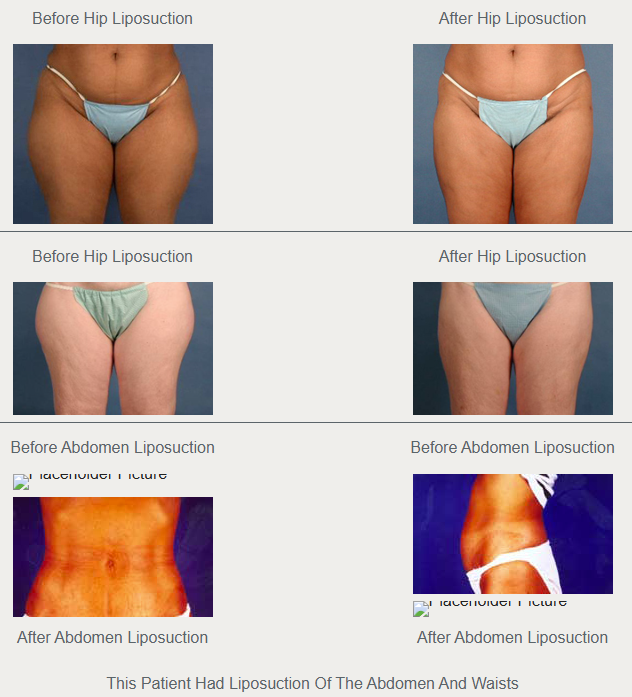
When viewing a surgeon’s own photographs, ask to see people with similar starting anatomy. Compare lighting, posture, camera angle, and how long after surgery each image was taken. Ask whether any other procedures contributed to the change.
How much does liposuction cost in Decatur, AL?
A personal consultation is needed for a local quote. As a national reference, the American Society of Plastic Surgeons lists an average liposuction surgeon’s fee of $4,711 on its cost page, checked September 21, 2026. That figure is not a Decatur price and does not include anesthesia, facility charges, or all other expenses. [8]
Request a written estimate that separates the surgeon’s fee, anesthesia, surgical facility, tests, compression garments, and prescriptions. Ask which follow-up visits are included and how additional treatment or revision fees would be handled. Compare quotes for the same areas and planned procedure. [8]
Cosmetic liposuction is usually paid for out of pocket; most health insurance plans do not cover it or its complications. If treatment is being considered for a medical condition, ask the treating clinician and insurer about that specific indication rather than assuming the rules for cosmetic contouring apply. [8][9]
Include time away from work, transportation, and help at home in your personal budget. If you are considering financing, review the total repayment amount as well as the monthly payment.
Preparing for surgery
Your team may request medical testing and a medication review. Discuss all prescriptions, over-the-counter medicines, vitamins, supplements, and nicotine products. Some products increase bleeding or affect anesthesia. Do not independently stop a prescribed medicine; ask the surgeon and prescribing clinician to coordinate any changes. [10]
Ask for written instructions covering food and drink before anesthesia, medication timing, transportation, and overnight support. ASPS advises arranging an adult to drive you home and stay with you for at least the first night after outpatient liposuction. [10]
Before choosing a date, organize help with lifting, childcare, errands, and physically demanding chores. Make sure you know whom to call after hours and where your follow-up visits will take place.
Recovery: what to plan for
Swelling, bruising, soreness, and temporary changes in sensation can occur after surgery. Compression garments and, in some cases, drains may be part of your care. Your surgeon should explain wound care, medications, garment use, and follow-up appointments. [11]
- First week: expect to limit activity and allow time for discomfort and swelling to improve. Build in help at home.
- Weeks two and three: some people are ready to return to work as they feel better. The timing depends on the operation and the physical demands of the job.
- Following weeks: swelling usually improves gradually. Exercise and lifting should increase only according to your team’s instructions. [11]
A desk job, a warehouse shift, and caring for a toddler involve very different demands. Tell the surgeon what your normal day requires and ask for separate guidance on work, driving, lifting, and exercise. Do not use a general recovery timeline as clearance for a particular activity.
The NHS notes that swelling and the final contour can take up to six months to settle. Early photographs may therefore look different from later results. Ask when your surgeon expects to assess the outcome and whether any firmness or unevenness needs an examination. [9]
How long do results last?
The removed fat cells do not return, but remaining fat cells can enlarge with weight gain. Weight changes, aging, and skin changes can affect the contour over time. Maintaining a stable weight helps preserve the result; surgery does not prevent future changes in body shape. [4]
Risks and possible complications
Liposuction is surgery. Possible problems include uneven contours, asymmetry, loose or rippled skin, persistent numbness, fluid collections, infection, poor wound healing, and the need for revision. Serious complications can include blood clots, heart or lung problems, anesthesia complications, and damage to deeper structures. Energy-assisted techniques can also cause heat injury. [12]
The amount and extent of treatment matter. Mayo Clinic notes that risk rises when larger areas are treated or several operations are performed together. Ask how your health, planned treatment areas, and any combined procedures affect your individual risk. [4]
After surgery: seek emergency care for chest pain or shortness of breath. Contact the surgical team promptly for severe pain or unexpected symptoms, and follow its written instructions about warning signs. [9][11]
Planning a consultation in Decatur, Huntsville, or Athens
When comparing offices across North Alabama, consider the full care arrangement: who performs the surgery, where it takes place, who provides anesthesia, and who handles a concern afterward. Ask whether consultation, surgery, and follow-up appointments are at the same location.
You can check plastic surgery board certification through the American Board of Plastic Surgery’s verification tool. Check Alabama license status and available public disciplinary actions through the Alabama medical board’s licensee search. A specialty listed in the state database is not the same as independently verified board certification. [13][14]
Ask whether the operation will take place in an accredited surgical facility or hospital and how emergencies are handled. [10]
For an appointment outside Decatur, plan transportation and the return trip for follow-up care. Before booking, ask what happens if you need an in-person assessment sooner than expected. The closest office and the most convenient follow-up arrangement are not always the same.
Frequently asked questions
Can liposuction be part of a “mommy makeover”?
It may be considered alongside abdominal or breast surgery after pregnancy. The phrase describes a combination of procedures rather than one standard operation. Discuss your main concern, future pregnancy plans, and the risks of combining surgery. Depending on your goals, our guides to breast lift or breast reduction may also be useful. [4][5]
Will liposuction remove loose skin or stretch marks?
Liposuction removes fat. It does not remove stretched skin or reliably improve stretch marks, and loose skin can remain afterward. A consultation can clarify whether a different contouring procedure would address your concern. [9]
Is liposuction only for women?
No. Men may also seek contour changes in areas such as the waist, abdomen, or chest. Candidacy depends on anatomy, health, and goals rather than gender. [1][2]
Do I have to have general anesthesia?
Not always. The anesthesia plan depends on the technique and extent of surgery, as well as your health and the team’s assessment. Ask what is proposed for your operation and who will administer and monitor it. [3]
Is liposuction the same as fat freezing?
No. Liposuction surgically removes fat through incisions; fat freezing is a noninvasive treatment applied at the skin surface. They differ in likely results, recovery, limitations, and risks. Ask a qualified clinician to compare them for your particular goal. [6]
Sources and further reading
Medical information and linked resources checked September 21, 2026. This article updates historical site material using the references below; it has not been reviewed by a clinician on behalf of this website.
- American Society of Plastic Surgeons. Liposuction overview.
- American Society of Plastic Surgeons. Liposuction candidates.
- MedlinePlus. Liposuction.
- Mayo Clinic. Liposuction: overview, risks, and results.
- American Society of Plastic Surgeons. Tummy tuck.
- U.S. Food and Drug Administration. Non-invasive body contouring technologies.
- American Society of Plastic Surgeons. Liposuction procedure steps.
- American Society of Plastic Surgeons. Liposuction cost.
- NHS. Liposuction.
- American Society of Plastic Surgeons. Liposuction preparation.
- American Society of Plastic Surgeons. Liposuction recovery.
- American Society of Plastic Surgeons. Liposuction risks and safety.
- American Board of Plastic Surgery. Verify certification.
- Alabama Board of Medical Examiners and Medical Licensure Commission. Licensee search.