
MALE BREAST REDUCTION · NORTH ALABAMA
Male Breast Reduction in Decatur, Alabama
Understand gynecomastia, compare treatment options, and explore historical photos, incision choices, recovery, and costs.
Male breast reduction can reduce excess breast tissue and improve chest contour. The right approach depends on the cause of the enlargement and how much glandular tissue, fat, and loose skin are present. [1]
This guide explains what to discuss when considering gynecomastia surgery in Decatur, AL. It includes historical photographs from the former practice and questions to take to consultations in Decatur, Huntsville, or nearby North Alabama communities.
ON THIS PAGE
- Glandular tissue or chest fat?
- Causes and medical evaluation
- Who may be a candidate
- Liposuction, excision, and skin removal
- Historical before-and-after photos
- Consultation and preparation
- Recovery, school, and work
- Scars and lasting results
- Risks and warning signs
- Costs and insurance
- Choosing a local surgeon
- Consultation checklist
- Common questions
Gynecomastia or excess chest fat?
Gynecomastia means an increase in glandular breast tissue in boys or men. It can affect one side or both, and the sides may differ. Fullness caused by fat without glandular enlargement is called pseudogynecomastia. These are different findings, even though they may look similar. [2]
The chest can also have a combination of fat, glandular tissue, and stretched skin. An examination helps identify which features are contributing to its shape. A photograph alone cannot establish the cause or determine the best treatment. [1][3]
Causes and medical evaluation
Hormone changes during puberty or later life can contribute to gynecomastia. Other possible causes include certain medicines, anabolic steroids, low testosterone, thyroid disorders, and liver or kidney disease. Less commonly, a hormone-producing tumor is involved. Sometimes no clear cause is found. [3]
Tell your clinician about prescription medicines, supplements, hormone products, alcohol, and recreational substances. A medication change or treatment of an underlying condition may help, but do not stop prescribed treatment on your own. Ask the prescribing clinician to review any suspected connection. [3]
When breast changes need assessment
Arrange a medical assessment for a new or changing breast lump, persistent pain, nipple discharge, or skin dimpling. A firm or hard lump deserves evaluation. Gynecomastia is benign, but other conditions can cause breast changes; a new one-sided change should not simply be assumed to be cosmetic. [2][4]
Evaluation starts with your history and an examination. Depending on the findings, testing may include hormone or other blood tests, breast imaging, or a biopsy. The clinician decides what is needed rather than ordering the same tests for everyone. [4]
Who may be a candidate for surgery?
Surgery may be considered when breast enlargement persists, its cause has been assessed, and the appearance or physical symptoms remain troublesome. Suitable candidates generally have stable breast development, realistic expectations, and health that supports healing. Smoking and ongoing substance-related causes need to be addressed. [5]
For teenagers, timing needs particular care. Pubertal gynecomastia often improves without treatment, so observation and follow-up may be appropriate. Surgery is sometimes considered for persistent symptoms or distress, but further breast development can mean another procedure is needed later. [4][5]
Discuss what matters most to you: tenderness, nipple prominence, chest size, asymmetry, loose skin, or how clothing fits. A useful consultation connects those goals to a specific plan and explains what improvement is realistic. [8]
Liposuction, gland excision, and skin removal
Liposuction for excess fat
Liposuction removes fat through small incisions. It may be suitable when fatty tissue is the main concern, but it does not remove glandular breast tissue. Our liposuction guide explains the broader procedure. [4][6]
Excision for glandular tissue
Excision removes breast gland tissue directly. The original article described an incision along the lower edge of the areola, the darker skin around the nipple. The proposed incision depends on the tissue to be removed; liposuction and excision may be combined to shape the surrounding chest. [6]
Skin removal for a larger reduction
When the skin is substantially stretched, removing fat or gland tissue alone may leave excess skin. Skin excision may be needed, sometimes with changes to nipple position or areola size. This can require longer scars. Ask the surgeon to draw the full incision pattern and explain the trade-off between skin tightening and scar length. [6]
Anesthesia may involve intravenous sedation or general anesthesia. Confirm the surgical facility, expected duration, and discharge arrangements for your particular operation. [6]
Historical male breast reduction before-and-after photos
These are complete comparisons from the original website. The former page described its after photographs as taken at approximately 12 months; timing and operative details have not been independently verified. They illustrate individual outcomes from the former practice and do not predict your result.
Front and side views
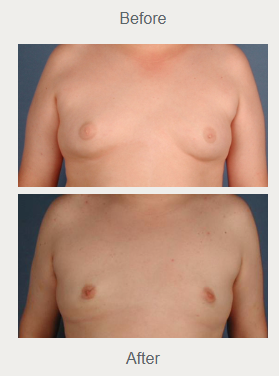
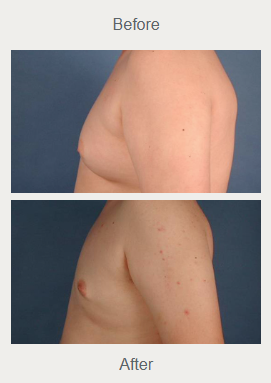
The original page grouped these views as a gynecomastia case with additional skin. The photographs do not establish which combination of surgical steps would be appropriate for another person.
A case involving skin removal
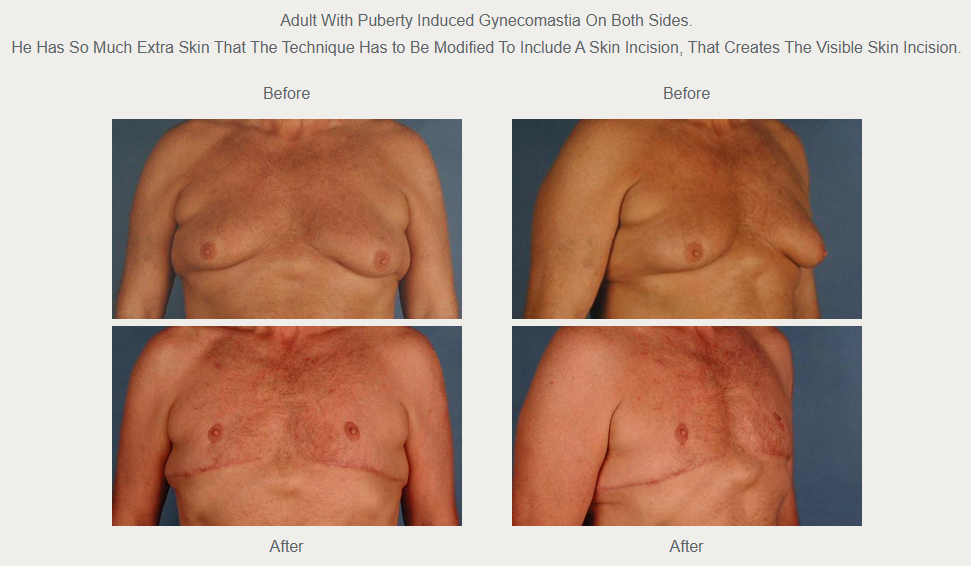
The supplied image pixels and original labels are preserved. These images are historical educational material, not evidence of services currently offered by this website. Ask a prospective surgeon to show healed results and scars from cases similar to the operation being proposed for you.
Consultation and preparation
Bring a list of medicines and supplements, previous surgery details, allergies, and relevant medical history. Explain when the enlargement began, whether it has changed, and whether you have pain or discharge. The surgeon should assess skin quality, breast size, and nipple position, and explain any further evaluation needed. [8]
Preparation may include medical testing, smoking cessation, and coordinated changes to medicines that affect bleeding. Ask the surgical team and prescribing clinician to agree on those changes; do not stop blood thinners or other prescribed medicines yourself. [7]
Arrange a ride home and an adult to stay with you for at least the first night. Get written instructions for fasting, medicines, wound care, and follow-up. Plan help with household tasks and lifting while activity is restricted. [7]
Recovery, school, and time off work
Soreness, bruising, and swelling are expected after male breast reduction. Recovery takes several weeks, and an operation involving substantial skin removal may have different restrictions from a smaller procedure. Ask for an estimate based on the planned surgery and your daily activities. [10]
Dressings, compression, and drains
Dressings cover the incisions, and a support garment may be used while the chest heals. Some patients have temporary drains to remove fluid. Ask how to care for them, when they may be removed, and when you can shower. These schedules are individualized. [9]
Work, school, and exercise
Some people can return to light work after a few days, while others need longer. Heavy lifting and strenuous exercise require a longer break; the NHS notes that a full return to normal activities may take about six weeks. This is a planning estimate, not clearance to exercise. [10]
For school, discuss backpacks, sports, physical education, and transport. For work, describe the actual lifting, reaching, and repetitive tasks involved. Ask about modified duties and get separate instructions for returning to chest workouts or contact sports.
Driving also requires clearance: you need to move comfortably, tolerate the seatbelt, and avoid medicines that impair alertness. Keep follow-up appointments so the team can assess wound healing, swelling, and any drains or stitches. [9][10]
Scars and lasting results
Every surgical incision leaves a permanent scar, although its appearance can soften over time. Small incisions may be less noticeable around the areola or within natural contours. Larger skin reductions can leave longer visible scars, as shown in the historical adult comparison. [11]
Early swelling can obscure the chest contour. ASPS notes that the final result may take three to six months to become apparent. Some people need additional surgery to address a complication, remaining skin excess, or an unsatisfactory contour; a particular result cannot be guaranteed. [11]
Results can be long lasting, but ongoing causes such as certain medicines, anabolic steroid use, or weight gain may affect them. Discuss those factors with your clinician and keep prescribed medication decisions coordinated with the person managing that treatment. [9]
Risks and warning signs
Possible complications include bleeding or a hematoma, fluid collection, infection, poor wound healing, unfavorable scars, asymmetry, contour irregularities, and temporary or permanent changes in nipple sensation. Persistent pain, tissue injury, anesthesia complications, and blood clots are also possible. Revision surgery may be needed. [12]
Before surgery, ask which risks are most relevant to you and who will assess a concern after hours. Contact the surgical team promptly for unexpected symptoms, severe pain, unusual swelling, or a change in skin color. [10][12]
Seek emergency medical care for shortness of breath, chest pain, or an unusual heartbeat after surgery. Do not wait for a scheduled follow-up appointment. [9]
Male breast reduction costs and insurance
The price in Decatur depends on the operation, surgeon, anesthesia, and facility. Ask for a written total that includes testing, garments, medicines, and follow-up, and clarify what additional care or revision would cost. A national surgeon-fee average is not a complete local quote. [13]
Insurance coverage should not be assumed. ASPS states that most health plans do not cover male breast reduction, although individual policies differ. Ask your insurer for its current gynecomastia policy and whether your circumstances may meet its criteria. [13]
If coverage may apply, ask what documentation and prior authorization are required, which providers and facilities are in network, and what deductible or coinsurance you would owe. Obtain a written explanation of benefits and exclusions before committing to surgery.
Choosing a male breast reduction surgeon near Decatur
For consultations in Decatur, Huntsville, Athens, or nearby communities, verify the physician’s Alabama license through the Alabama Board of Medical Examiners. Check specialty certification separately through the American Board of Plastic Surgery when considering a plastic surgeon. [14][15]
Ask about experience with gynecomastia cases that resemble yours, including skin removal if relevant. Confirm where surgery takes place, who provides anesthesia, and how follow-up and urgent concerns are handled. Include travel for repeat visits when comparing options.
Common questions
Does gynecomastia always need surgery?
No. Some cases improve with observation or treatment of an underlying cause. A clinician may consider medication for selected patients, but medicines used for gynecomastia are not FDA-approved specifically for that indication. Treatment should follow an assessment of the cause and duration. [3]
Can it affect just one side?
Yes. Gynecomastia can affect one or both breasts, sometimes unevenly. A new one-sided change still deserves examination rather than a diagnosis based on appearance alone. [2]
Will surgery remove all visible scarring?
No. Surgery creates scars. The amount of tissue and skin removal influences the incision pattern, and individual healing affects how visible the scars remain. Review healed examples as well as early results before deciding. [11]
Can exercise replace treatment?
Exercise can support general fitness, but glandular enlargement needs assessment separately from body fat. Ask what part of your chest fullness could change with weight management and what might require another approach. Our body contouring guide covers related surgical options. [1][2]
Does surgery guarantee permanent symmetry?
No. Some asymmetry or contour irregularity can remain, and further treatment may be needed. Discuss the improvement the surgeon expects and the limitations of your proposed operation. [12]
Sources and further reading
Medical resources checked September 22, 2026. This guide updates the supplied historical male breast growth article and preserves the three complete supplied photo comparisons. The former practice’s hospital arrangements, insurance statements, and recovery schedules are not presented as current services. This page has not been reviewed by a clinician on behalf of this website.
- American Society of Plastic Surgeons. Gynecomastia surgery overview.
- Mayo Clinic. Gynecomastia: symptoms and causes.
- Endocrine Society. Gynecomastia.
- Mayo Clinic. Gynecomastia: diagnosis and treatment.
- American Society of Plastic Surgeons. Gynecomastia surgery candidates.
- American Society of Plastic Surgeons. Gynecomastia procedure steps.
- American Society of Plastic Surgeons. Preparing for gynecomastia surgery.
- American Society of Plastic Surgeons. Gynecomastia consultation.
- American Society of Plastic Surgeons. Gynecomastia surgery recovery.
- NHS. Male breast reduction: recovery and complications.
- American Society of Plastic Surgeons. Gynecomastia surgery results and scars.
- American Society of Plastic Surgeons. Gynecomastia surgery risks and safety.
- American Society of Plastic Surgeons. Gynecomastia costs and insurance.
- Alabama Board of Medical Examiners and Medical Licensure Commission. Licensee search.
- American Board of Plastic Surgery. Verify certification.