HUNTSVILLE & NORTH ALABAMA
Liposuction in Huntsville, Alabama: Cost, Options & Recovery
A practical guide to comparing treatment plans, understanding quotes, and preparing for recovery.
If you are considering liposuction in Huntsville, start with the areas you want to change and the result you hope to see. Liposuction removes localized fat through small incisions. It can improve body contours, but it does not treat obesity or reliably correct cellulite or loose skin.1
Comparing practices becomes easier when each consultation answers the same questions: What exactly will be treated? What does the full price include? Who performs the surgery? Where will follow-up happen? This guide helps you organize those decisions in Huntsville and across North Alabama. For a broader introduction to the operation, see our liposuction procedure guide.
How much does liposuction cost in Huntsville, Alabama?
There is no verified Huntsville-wide price in this guide. A useful estimate requires an examination and a written plan specifying the areas treated, anesthesia, and surgical setting. A price for one limited area cannot tell you the cost of treating several areas together.
The American Society of Plastic Surgeons currently lists $4,711 as a national average surgeon’s fee for liposuction. That excludes anesthesia, operating-room facilities, and other related expenses. It is neither a Huntsville quote nor an all-inclusive price, and it should not be multiplied by the number of treatment areas.2
Compare the same treatment plan, line by line
Ask each practice to put the following details in writing. If two totals differ, first check whether they describe the same operation and follow-up arrangements.
| Quote item | What to clarify |
|---|---|
| Treatment areas | Have every area marked on a diagram, including left and right sides. Ask how the practice counts an “area” and whether the quoted price covers all of it. |
| Surgeon’s fee | Confirm who will perform the procedure and whether the fee covers the entire agreed plan. |
| Anesthesia & facility | Request both charges, the planned anesthesia, and any circumstances that could change the total. |
| Additional treatments | Separate any skin-tightening procedure, fat transfer, or skin-removal surgery from the liposuction price. Ask why each is recommended. |
| Preparation & supplies | Ask whether testing, prescribed medicines, and compression garments are included or billed separately. |
| Follow-up & revisions | Clarify the included visits, urgent-care arrangements, and which expenses could remain your responsibility if further treatment is needed. |
| Payment terms | Obtain the total cash price, deposit and cancellation terms, and quote expiration date. If financing, request the full repayment amount and fees. |
The medical cost categories above reflect ASPS’s guidance; the comparison questions help you check what a particular practice includes.2 Keep a separate personal budget for time off, transportation, childcare, and help at home. A monthly payment alone does not show the complete commitment.
Which areas can be treated—and what does “360 lipo” include?
Common liposuction areas include the abdomen, waist, back, hips, thighs, upper arms, and under the chin. Suitability depends on the fat distribution and the condition of the overlying skin.1 Bring a short list of your priorities so the consultation can focus on the changes that matter most to you.
If an advertisement or quote says “360 lipo,” ask the practice to mark exactly which parts of the abdomen, sides, and back are included. Also ask whether upper and lower portions or paired areas are priced separately. A label alone cannot answer those questions.
For example, if your main concern is how the waist looks from the front and back, ask the surgeon to explain how the proposed treatment addresses both views. Then request a written description you can compare with another consultation. If you are considering several areas, ask whether doing them together or in separate operations is appropriate for you.
VASER, laser, tumescent, and power-assisted liposuction
These terms describe different aspects of treatment. They are not necessarily mutually exclusive: a surgeon may use tumescent fluid with an energy-assisted technique.4 Ask what the proposed method changes about your operation, including its risks and cost.
| Term | Meaning and consultation question |
|---|---|
| Tumescent | Medicated fluid is placed in the treatment area before fat removal. Ask what anesthesia and sedation, if any, will accompany it.4 |
| VASER / ultrasound-assisted | Ultrasound energy helps break down fat before removal. Ask why this approach fits your anatomy and what additional risks it introduces.5 |
| Laser-assisted | A laser is used beneath the skin to help break down fat. Ask whether the proposal includes surgical suction and what improvement is realistically expected.4 |
| Power-assisted | A powered cannula moves rapidly to assist fat removal. Ask about the surgeon’s experience using it for your treatment areas.5 |
For “high-definition” or “awake” offers, request an explanation in ordinary language: What contour is being attempted? Which medicines will be used? Who monitors you? What happens if the plan needs to change? Local anesthesia and general anesthesia are both used in liposuction, depending on the case.4
Liposuction, a tummy tuck, or nonsurgical fat reduction?
When loose skin is part of the concern
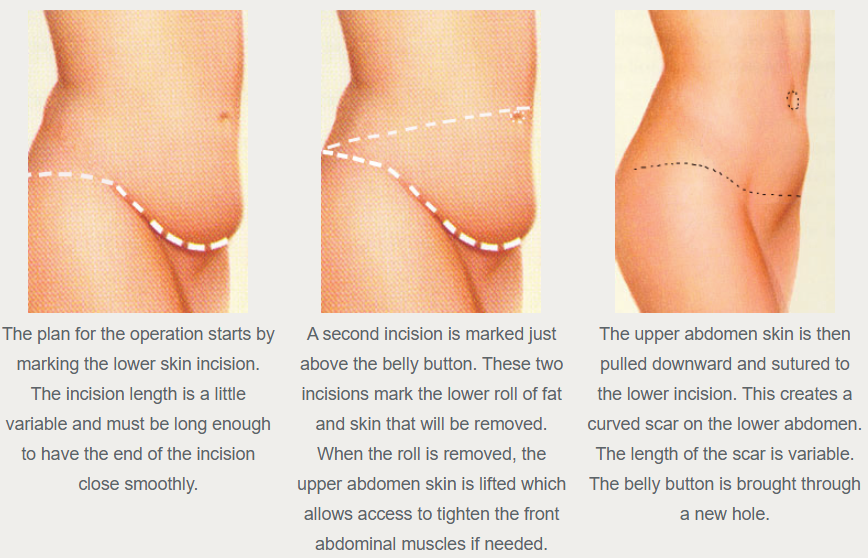
Removing fat does not necessarily leave a tight skin envelope. If loose abdominal skin is a major concern, ask whether liposuction alone would leave that concern unresolved. A tummy tuck removes excess skin and fat and may address weakened or separated abdominal muscles.1, 7 Our full tummy tuck guide explains the operation and its trade-offs.
When you want to avoid surgery
Noninvasive body-contouring devices work from the skin’s surface without surgical incisions. Ask which device would be used, whether its authorized use includes your treatment area, how many sessions are proposed, and what change to expect. These treatments do not treat obesity or provide the health benefits of weight loss.6
Nonsurgical treatment still has risks. With fat freezing, a possible complication is paradoxical adipose hyperplasia: the treated fat becomes larger instead of smaller and may require surgery. Compare the complete treatment course and its limitations before choosing on the basis of downtime alone.6
Are you a candidate, and what should you discuss first?
ASPS describes typical candidates as healthy adults with localized fat, good skin elasticity, realistic expectations, and no smoking or vaping. Your surgeon must assess your individual health and goals; an online photograph or questionnaire cannot replace that assessment.3
Bring your medical history, previous surgery details, medication and supplement list, and information about nicotine or other substance use. Explain your weight goals and the activities you need to return to. The consultation should include a health assessment, discussion of options, and an explanation of likely outcomes and risks.12
Before scheduling, obtain the practice’s testing, medication, and nicotine instructions. Have the surgical team coordinate any medication changes with the prescribing clinician. Arrange a responsible adult to drive you and stay with you for at least the first night, as ASPS advises.9
Liposuction recovery: time off, driving, and daily tasks
Recovery depends on how much of the body is treated and the work you do. Your surgeon should give you a timetable for returning to work and driving.16 Describe your actual tasks—desk work, lifting, long periods standing, or caring for children—rather than asking only when you can resume “normal activity.”
| Period | Planning considerations |
|---|---|
| First week | ASPS advises significantly limiting activity while monitoring pain, swelling, and bruising. Organize help with essential household tasks. |
| Weeks 2–3 | Some people return to work during this period, depending on their job. Exercise and other activities may still be restricted. |
| Weeks 4–5 | Bruising and swelling may be improving. Ask which restrictions still apply before resuming demanding tasks. |
| Week 6 and beyond | Swelling can continue to improve. Gradual increases in activity and gentle exercise depend on your surgeon’s instructions. |
This is a planning framework based on ASPS guidance, not personal clearance. Follow your own instructions for compression garments, wound care, bathing, medicines, and follow-up.8
Before surgery, put three practical arrangements on your calendar: a backup driver, help with tasks you may be unable to manage, and the first follow-up visit. Ask whether a remote-work arrangement is realistic for your procedure. Working from home can still involve prolonged sitting and limited opportunities to rest.
Risks to discuss before committing to surgery
Liposuction risks include infection, bleeding, persistent changes in sensation, irregular contours, fluid accumulation, poor healing, and anesthesia complications. Less common but serious problems include blood clots, injury to deeper structures, and heart or lung complications. Further surgery may be needed.10
Treating larger body surfaces or combining procedures can increase complication risk, according to Mayo Clinic.5 Ask how the proposed extent of surgery affects your risk and whether a smaller or staged plan would make sense. A package discount is not a medical reason to add areas.
Get written instructions explaining expected symptoms, when to call, and how to reach the team after hours. Contact the surgical team promptly about severe pain or unexpected symptoms.16
How to judge results and before-and-after photographs
Results develop as swelling subsides, and liposuction does not guarantee a particular contour. Maintaining a stable weight helps results last, while aging can still change skin firmness.11 The NHS notes that the treated area can take up to six months to settle completely.16
When reviewing a surgeon’s gallery, ask to see comparable starting shapes and the same treatment areas you are considering. Check the time between photographs, changes in weight, and any additional procedures. Consistent lighting, posture, and camera angles make comparisons easier to interpret.
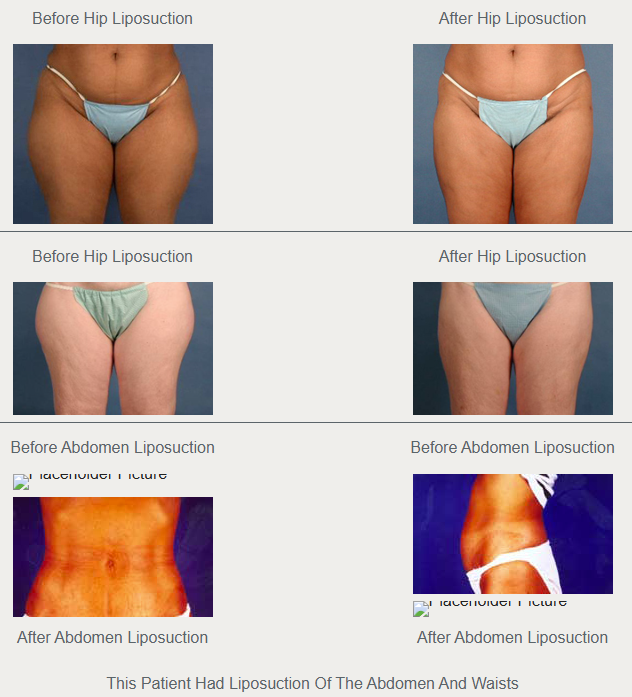
Use photographs to start a discussion, then ask the surgeon to explain what is realistic for your skin and anatomy. A persuasive consultation should address the limits of the proposed result as clearly as the hoped-for improvement.
Choosing a liposuction surgeon in Huntsville or North Alabama
Start with the operating surgeon’s full name and claimed credentials. You can check American Board of Plastic Surgery certification through the ABPS verification tool. Separately, use the Alabama medical license search to review licensure information and available public actions.14, 15
Ask about experience with your proposed procedure, hospital privileges, and the credentials of the surgical facility. Discuss how complications are handled and what happens if you are dissatisfied with the outcome.13 Reviews and photo galleries can help you prepare questions, but they do not replace those checks.
Confirm three addresses before you schedule
Whether you live in Huntsville or travel from Madison, Decatur, or Athens, confirm the addresses for consultation, surgery, and follow-up. Ask whether all three take place at the same location. Build transportation and help at home around the actual surgery address and appointment schedule.
If you plan to recover away from the surgical office, ask how close you should remain, when the first examination is required, and where an urgent assessment would happen. Make sure your support person has the written instructions and contact numbers before surgery day.
Common questions
Will insurance pay for cosmetic liposuction?
ASPS says most health insurance plans do not cover cosmetic liposuction or its complications. Confirm your own benefits and the practice’s payment terms before committing.2
Will liposuction remove stretch marks or cellulite?
It does not remove stretch marks or reliably improve cellulite. Make sure the surgeon understands if skin texture is your main concern, because removing fat may not address it.5
Does liposuction leave scars?
Yes. It requires incisions, and scars are a possible lasting effect. Ask where the incisions would be placed and how your own healing history affects expectations.16
Can I gain weight after liposuction?
Yes. Liposuction does not prevent future weight gain. Changes in weight can change your contours, including areas previously treated.5
Can I get a reliable price from photos alone?
Treat a remote estimate as a starting point. Ask what the surgeon still needs to examine, which assumptions the estimate uses, and when you will receive the final written treatment plan and total.
References & Sources
- American Society of Plastic Surgeons: Liposuction overview
- ASPS: Liposuction cost
- ASPS: Liposuction candidates
- MedlinePlus: Liposuction
- Mayo Clinic: Liposuction
- FDA: Non-invasive body contouring technologies
- ASPS: Tummy tuck
- ASPS: Liposuction recovery
- ASPS: Preparing for liposuction
- ASPS: Liposuction risks and safety
- ASPS: Liposuction results
- ASPS: Liposuction consultation
- ASPS: Questions to ask your surgeon
- American Board of Plastic Surgery: Verify certification
- Alabama Board of Medical Examiners: Licensee search
- NHS: Liposuction