
EAR RESHAPING · NORTH ALABAMA
Otoplasty and Ear Pinning in Decatur, Alabama
Explore ear pinning for children and adults, historical before-and-after photos, incision choices, recovery, and costs.
Otoplasty reshapes or repositions the outer ears. For prominent ears, often called protruding ears, the aim may be to create a more defined cartilage fold, bring the ears closer to the head, or address differences between the two sides. [1][3]
This guide explains what to discuss when considering otoplasty in Decatur, AL. It includes two historical photo comparisons from the original website and practical questions for consultations in Decatur, Huntsville, or nearby North Alabama communities.
ON THIS PAGE
- What otoplasty can change
- Children, teenagers, and adults
- Historical before-and-after photos
- Ear reshaping and incisions
- Consultation and preparation
- Anesthesia and the day of surgery
- Recovery and protecting the ears
- School, work, and sports
- Scars and lasting results
- Risks and warning signs
- Costs and insurance
- Choosing a surgeon and questions
- Common questions
What otoplasty can change
Otoplasty can improve the shape, position, or proportions of the outer ear. It may address prominence on one side or both, ear shape differences present from birth or development, or changes after injury. The plan depends on the particular anatomy and the concern you want to address. [1]
The original article focused on two features: the antihelical fold, which is the inner cartilage ridge just inside the outer rim, and the conchal bowl, the deeper cup near the ear canal. A less developed fold or a prominent conchal bowl can contribute to ears that stand away from the head. [3]
Ask the surgeon to show which features are contributing to your ear position. “Ear pinning” is a familiar name, but the operation should be tailored to the ear rather than aiming for the same position in every patient.
Who may be a candidate?
Children
ASPS describes children as possible candidates around age five, or when the ear cartilage is stable enough for correction. Health, untreated ear infections, cooperation, and the ability to follow instructions also matter. A birthday alone does not establish readiness. [2]
The child should be able to express their own feelings and should not object when surgery is discussed. Give them space to explain whether their ears bother them and what they expect to change. Consider the practical demands of dressings, follow-up visits, and avoiding rough play. [2]
Teenagers and adults
Adults and teenagers may also be candidates when they are healthy, have realistic goals, and do not have conditions that impair healing. Smoking needs to be discussed. Explain any previous ear surgery, injury, infection, or healing problem during the assessment. [2][4]
Historical otoplasty before-and-after photos
The original captions identify correction of both prominent ears in a young girl. The former page described its after photos as taken at approximately 12 months; the timing and operative details have not been independently verified.
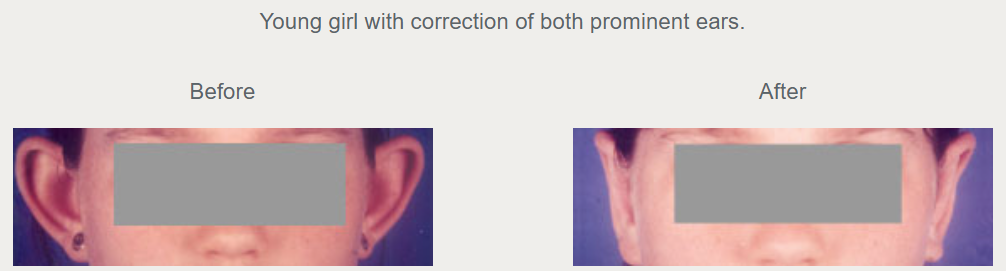
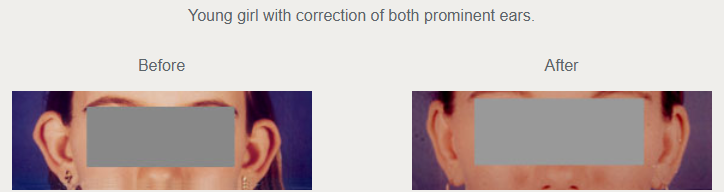
These photographs show individual outcomes from the former practice. They do not predict your result or represent services currently offered by this website. During a consultation, ask for comparable views of patients with a similar starting ear shape and the same proposed technique.
Ear reshaping and incision placement
Correction may involve creating or strengthening the antihelical fold, reducing prominent conchal cartilage, or combining these steps. Incisions are usually behind the ear; a front incision, when needed, may be placed within a natural fold. Internal stitches can hold the reshaped cartilage in position. [3]
Ask the surgeon to explain what will be changed on each side. The aim is a balanced shape that suits the face. Discuss the limits of symmetry and whether any existing differences are likely to remain.
The original article described permanent cartilage stitches and removal of a small area of skin behind the ear. Those are descriptions of its approach, not a requirement for every operation. Your surgeon should explain the planned method and whether it differs between the ears.
Consultation and preparation
Bring details of medical conditions, allergies, current medicines and supplements, previous operations, and tobacco use. The consultation should cover your goals, an examination, possible alternatives, expected results, and risks. Photographs may be taken for the medical record. [4]
Preparation may include a medical evaluation, testing, stopping smoking, and a coordinated plan for medicines that affect bleeding. Do not stop prescribed aspirin, blood thinners, or other medicines yourself. Ask the surgical team and prescribing clinician to agree on any changes. [5]
Get written instructions for fasting if required, medicines on the day of surgery, and postoperative pain relief. The original page’s blanket medication restrictions and claim that only one pain medicine is safe should not be used as your personal medication plan.
For outpatient surgery, arrange transport home and an adult to stay with the patient for at least the first night. For a child, discuss school arrangements and who will supervise recovery. Make sure you have the team’s daytime and after-hours contact details. [5]
Anesthesia and the day of surgery
Anesthesia options include local anesthesia, intravenous sedation, and general anesthesia. The choice should reflect the operation, age, health, and ability to cooperate. Confirm the proposed approach with the surgical and anesthesia teams. [3]
Otoplasty may take place in an accredited office surgical facility, an ambulatory surgical center, or a hospital. Ask where recovery will be monitored and what must happen before discharge. [8]
The former article described hospital day surgery under general anesthesia. Confirm the current surgeon’s facility, estimated operating time, and discharge arrangements rather than planning around the former practice’s schedule.
Recovery and protecting the ears
Dressings help protect the operated ears and support their position while healing begins. Some discomfort and itching under the bandage can occur. Follow the prescribed care plan and contact the team if the dressing slips or causes concern; do not take it off early on your own. [6]
Bathing, sleeping, and clothing
Ask when the bandage can be removed and when showering and hair washing are allowed. The NHS advises keeping a head bandage clean and dry and waiting until it is removed before washing hair. A nighttime headband may be recommended for several weeks. [10]
Ask how to sleep without putting pressure on the ears and how to dress without catching them. Glasses, hearing devices, protective goggles, and helmets should be discussed if they contact the operated area. Do not substitute a tight headband or other device for the one recommended by the team.
Follow-up visits
Confirm the first review, the plan for dressings, and whether any skin stitches require removal. Attend the scheduled visits so the surgeon can assess healing and ear position. The timing depends on the technique and the patient’s progress. [6]
Time off school, work, and sports
Recovery planning should include both comfort and protection from an accidental bump or pull. The NHS gives one to two weeks as a typical return-to-school estimate. The original page suggested a shorter break, so agree on an individual plan before booking surgery. [10]
For an adult’s desk job, ask when pain, dressings, travel, and any medicines would allow a safe return. Physical work may require more time or modified duties. Tell the surgeon about lifting, bending, heat exposure, and required protective equipment rather than relying on a generic number of days.
Sports need separate clearance. NHS guidance places swimming around four to six weeks and contact sports around eight weeks, but these are general estimates. Ask specifically about physical education, swimming, wrestling, ball sports, and activities requiring a helmet. [10]
For children, request written restrictions for the school or coach. Include playground and rough-play precautions as well as organized sports. Ask who should be contacted if the child is hit on the ear during recovery.
Scars and lasting results
A change in ear position is usually apparent after the initial dressings are removed. Scars are commonly located behind the ears or within natural folds. More extensive ear reconstruction can have a different course, with results developing in stages. [7]
Early appearance should be discussed at follow-up rather than judged from one photograph. Ask when the surgeon expects you to assess the shape, scar, and any remaining difference between the sides. Keep a record of concerns to review at appointments.
Ears can become prominent again. Ask how recurrence would be assessed and what further treatment could involve. [6][10]
Risks and warning signs
Possible complications include bleeding or a hematoma, infection, asymmetry, altered sensation, persistent pain, poor wound healing, contour irregularities, and unfavorable scarring. Allergic reactions, anesthesia complications, and blood clots are also possible. Some patients need revision surgery. [8]
Discuss risks in terms of the actual operation and the patient’s health. Ask how a suspected complication would be assessed and whether the surgeon or another qualified clinician will be available after hours. [8]
Contact the surgical team promptly for increasing pain, redness, swelling, bleeding, fever, unusual drainage, or a wound that opens or becomes dark. Report severe pain or any unexpected symptom, even if a follow-up appointment is already scheduled. [10][11]
Otoplasty costs and insurance
A Decatur-area quote should reflect the planned correction of one or both ears and include the surgeon, anesthesia, facility, tests, medicines, dressings, and follow-up. Ask what would cost extra if there were a complication or a need for revision. A national surgeon-fee average is not an all-inclusive local price. [9]
Being born with prominent ears does not automatically establish insurance coverage. ASPS notes that most plans do not cover elective cosmetic ear surgery. Some medically indicated procedures may qualify, but your insurer’s policy and authorization requirements determine what applies. [9]
The former page’s statement that approval was obtained in almost all cases should not be treated as a current promise. Ask for the applicable policy, documentation requirements, a written coverage decision when available, and an estimate of your out-of-pocket costs before committing to surgery.
Choosing an otoplasty surgeon near Decatur
When comparing practices in Decatur, Huntsville, Athens, or nearby communities, verify the physician’s license through the Alabama Board of Medical Examiners. Check relevant specialty certification separately; the American Board of Plastic Surgery has a verification tool for plastic surgeons. [12][13]
Ask about experience with the patient’s age group, similar ear anatomy, and the proposed technique. Confirm where surgery is performed, who provides anesthesia, and how follow-up and urgent problems are handled. For a child, include their questions in the conversation.
Common questions
Is otoplasty only for children?
No. Teenagers and adults can also be candidates. The decision should reflect the person’s concerns, health, expectations, and willingness to follow the recovery plan. [2]
Can just one ear be corrected?
Sometimes. Prominence can involve one ear or both. Ask how correcting one side would affect overall balance and whether any difference between the ears would remain. [1]
Does ear pinning treat hearing loss?
This guide concerns the position and shape of the outer ears. ASPS describes protruding ears as not associated with hearing loss. If hearing is a concern, request a separate assessment rather than assuming an appearance-focused operation addresses it. [1]
Are there nonsurgical options for a baby?
Ear splints may reshape a baby’s soft ear cartilage. Ask the pediatrician promptly about options for a newborn ear-shape concern. [10]
Will the ears look exactly alike?
Perfect symmetry cannot be promised. Discuss the expected improvement and any existing differences before surgery, and ask how an unsatisfactory result would be managed. [8]
Sources and further reading
Resources checked September 22, 2026. This guide updates the supplied historical otoplasty article and preserves both complete comparison images, including their privacy masks. Historical hospital arrangements, medication instructions, insurance claims, and recovery schedules are not presented as current services. This page has not been reviewed by a clinician on behalf of this website.
- American Society of Plastic Surgeons. Ear surgery overview.
- American Society of Plastic Surgeons. Ear surgery candidates.
- American Society of Plastic Surgeons. Ear surgery procedure steps.
- American Society of Plastic Surgeons. Ear surgery consultation.
- American Society of Plastic Surgeons. Preparing for ear surgery.
- American Society of Plastic Surgeons. Ear surgery recovery.
- American Society of Plastic Surgeons. Ear surgery results.
- American Society of Plastic Surgeons. Ear surgery risks and safety.
- American Society of Plastic Surgeons. Ear surgery costs and insurance.
- NHS. Ear correction surgery.
- MedlinePlus, U.S. National Library of Medicine. Surgical wound care: closed.
- Alabama Board of Medical Examiners and Medical Licensure Commission. Licensee search.
- American Board of Plastic Surgery. Verify certification.